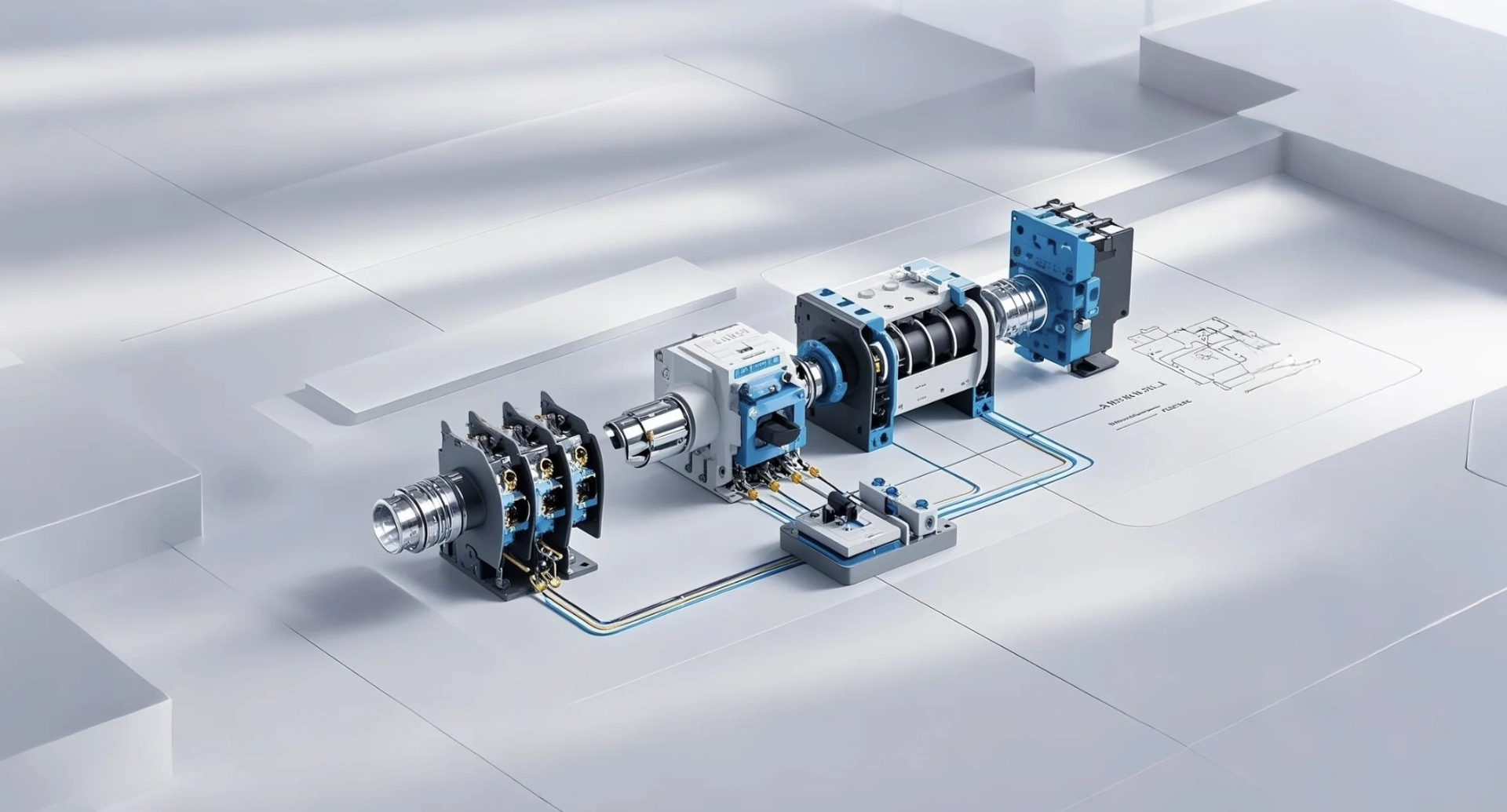
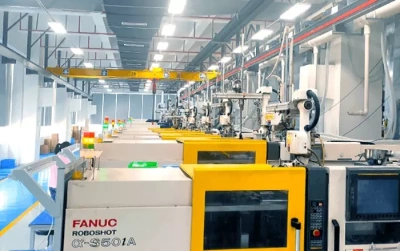
By 2028, custom manufacturing for the electronics industry is reshaped by three converging forces: AI-driven quoting, rapid prototyping, and scalable production. For a global audience in electronics, these shifts compress decision cycles, reduce engineering rework, and unlock agile capacity that scales from a single PCB enclosure to hundreds of thousands of end-use parts. The time horizon is 2028, geography is global, and the lens is practical value creation for engineers, operations leaders, and sourcing teams.
 -
-
Why These Trends Now
Generative and applied AI have moved from pilots to production, while additive manufacturing and digital machining have matured into reliable prototyping and end-use capabilities. According to McKinsey, 65% of organizations reported regularly using generative AI in at least one business function in 2024, with typical deployment windows of one to four months. In parallel, the additive manufacturing industry reached $20.035 billion in 2023 with 11.1% growth and 3,793 metal AM systems shipped, per Wohlers Report 2024. For electronics, these trends translate into faster iterations of thermal solutions, safer enclosures, and more predictable quoting for complex, configurable builds.
Deep Dive: The Three Core Trends
AI Quoting for Electronics Configurables
Definition & current state: AI-enabled quoting augments Configure-Price-Quote (CPQ) workflows to parse CAD/BOM, apply manufacturability rules, simulate cycle times, and return prices and lead times with traceable rationale. It improves consistency for high-mix, low-volume electronics orders (e.g., PCB housings, connector assemblies, thermal modules).
Key drivers: Complexity of configurable products; pressure for faster RFQ turnaround; need for cost transparency across CNC, injection molding, sheet metal, and AM; and tighter supplier collaboration.
Data points: The CPQ applications market grew 13.1% to $1.72B in 2022, per Gartner. McKinsey’s 2024 survey shows 65% of organizations regularly using gen AI in at least one function, including product/service development and IT—capabilities directly relevant to design-for-quote automation (source).
Value chain impact: Suppliers standardize quote logic; producers reduce RFQ cycle times and quote variance; distributors gain reliable landed-cost estimates; OEMs get earlier cost/lead-time signals to lock designs faster without sacrificing electrical safety or thermal margins.
Rapid Prototyping Across AM, CNC, and Molding
Definition & current state: Integrated rapid prototyping blends AM (metal/plastic), CNC machining, and prototype injection molding to validate fit, function, and thermal performance in days.
Key drivers: Shorter refresh cycles, design-for-manufacturing feedback loops, and production-grade materials for functional tests.
Data points: AM industry revenue grew 11.1% to $20.035B with 3,793 metal AM systems shipped in 2023 (Wohlers/ASTM). For injection molding prototypes, providers such as Protolabs cite “small, simple molded parts in as fast as 1 day,” underscoring the feasibility of rapid tooling for early electronics validation.
Value chain impact: Faster thermal and safety testing; accelerated enclosure validation; reduced late-stage changes; distributors and agents get earlier spec locks for downstream commitments.
Scalable Production That Bridges Prototype-to-Volume
Definition & current state: Digitally orchestrated capacity ramps—from pilot runs to high-volume manufacturing—using standardized quality systems (e.g., ISO 9001), multi-process networks, and data-driven scheduling.
Key drivers: Demand variability in electronics, multi-region fulfillment, and continuous qualification requirements for safety-critical components.
Data points: Total electronics assembly value (OEM+EMS+ODM) was ~$1.3T in 2023 and is forecast to reach ~$1.5T by 2028 at ~4.6% CAGR, according to Research and Markets. ISO 9001 remains the global quality management baseline for consistent process control (ISO).
Value chain impact: Suppliers synchronize to capacity signals; producers scale without retooling churn; distributors align inventory with real ramp data; end customers receive consistent electrical safety and thermal performance across volumes.
Data-Driven Outlook to 2028 (Global)
Expect AI quoting to become a default capability embedded in PLM/ERP/CPQ stacks; rapid prototyping to rely more on production-grade AM and fast-turn tooling; and scalable production to prioritize digital threads linking design, quality, and scheduling. Forecasts carry uncertainty—supply chain shocks, standards changes, or regulatory shifts may alter trajectories—but the direction is clear: faster cycles with better quality gates.
-
| Metric | Value | Year | Source |
|---|---|---|---|
| GenAI regular use in orgs | 65% (≥1 function) | 2024 | McKinsey |
| CPQ applications market size | $1.72B (+13.1% YoY) | 2022 | Gartner |
| AM industry revenue | $20.035B (+11.1%) | 2023 | Wohlers Report 2024 |
| Metal AM systems shipped | 3,793 (vs 3,049 in 2022) | 2023 | ASTM/Wohlers |
| Prototype molded parts lead time | As fast as 1 day (simple parts) | 2024 | Protolabs |
| Total electronics assembly value | ~$1.3T (2023) → ~$1.5T (2028) | 2023–2028 | Research and Markets |
Opportunities and Challenges
- Opportunities: Faster quote-to-order; early thermal validation; safer enclosure designs; flexible scaling for EMS programs; improved collaboration across distributors and agents.
- Challenges: Data quality and model governance for AI; qualification of AM materials; integration across PLM/ERP/CPQ; regulatory compliance for electrical safety and regional standards.
Action Guide (Electronics Audience)
- Strategic leaders (CEO/GM): Prioritize AI-augmented CPQ linked to PLM; invest in rapid tooling and AM for pilot runs; mandate ISO 9001-aligned quality governance across network suppliers.
- Operations & engineering managers: Embed DFM checks in quoting; standardize prototype test plans for thermal and safety; qualify AM materials aligned to IPC and IEC standards.
- General stakeholders: Use early quotes to lock specifications; schedule pilot runs before tooling commits; track ramp KPIs (yield, first-pass quality, lead-time stability).
Value Realization with RapidDirect
RapidDirect—founded in 2009 with its first self-operated factory in Shenzhen—has expanded globally since 2014 and built a multi-process manufacturing network (CNC, injection molding, sheet metal, and 3D printing). Its online quoting platform launched in 2019 and maintains ISO 9001 certification through 2025. For electronics OEMs and distributors, RapidDirect’s AI-enabled quoting and rapid prototyping accelerate iteration while ensuring scalable production paths.
To apply these trends to your program, book an expert consultation or start an inquiry for a tailored plan that balances speed, quality, and cost.
References
- McKinsey: The state of AI in 2024; The state of AI in 2025
- Gartner: Magic Quadrant for CPQ Applications; Gartner Research portal
- Wohlers/ASTM: Wohlers Report 2024; ASTM press release
- Protolabs: Prototype tooling lead times
- Research and Markets: Worldwide EMS market, 2024 edition
- ISO: ISO 9001 Quality management