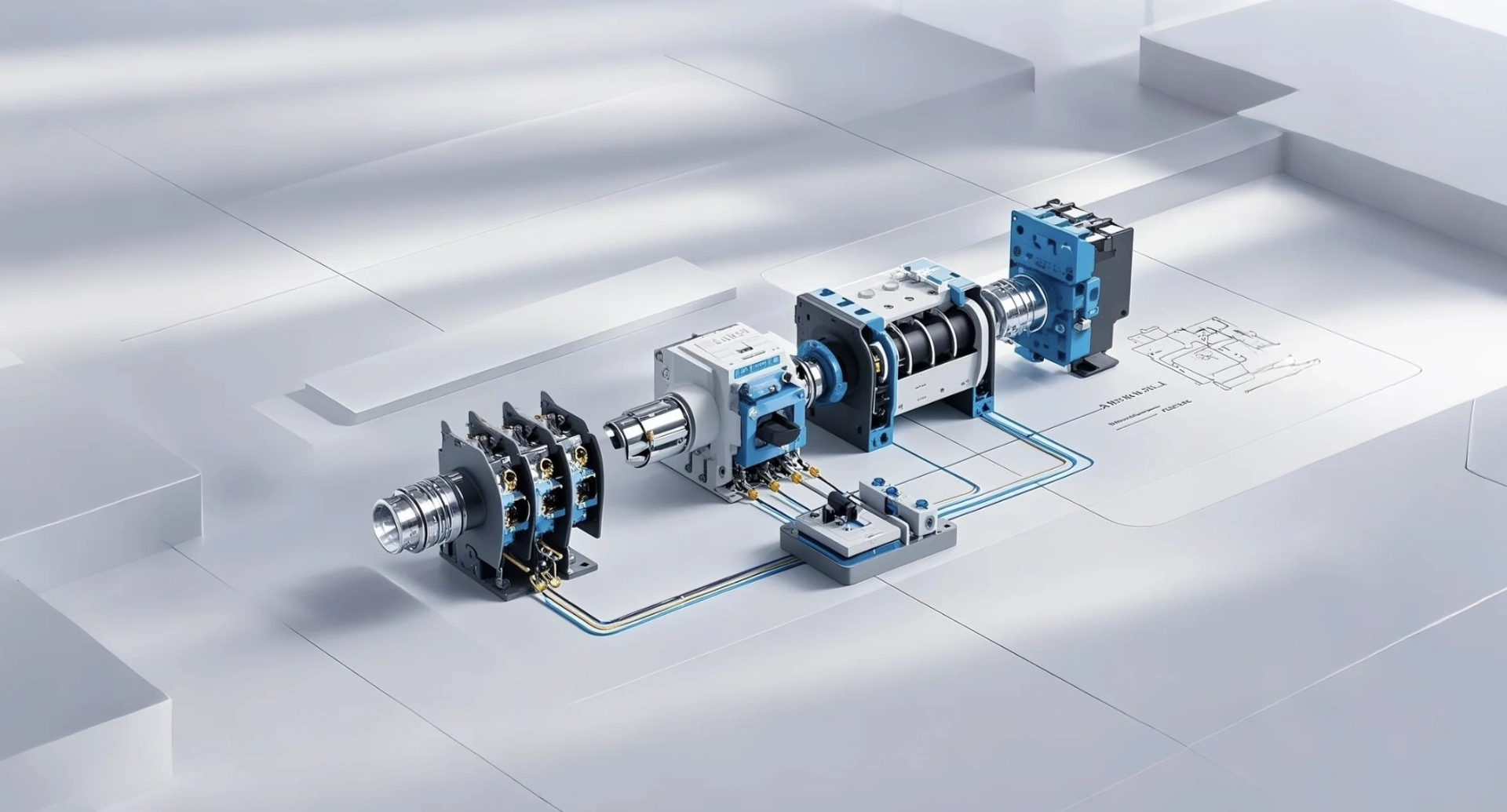
Definition and Importance
Automotive diagnostic equipment comprises the instruments, interfaces, and software used to communicate with vehicle electronic control units (ECUs) to read trouble codes, stream live data, run functional tests, and program modules, aligned with standardized communication between vehicles and external test equipment as defined in ISO 15031 for emissions-related diagnostics ISO 15031-4.
In repair shops, this equipment underpins efficient fault isolation, accurate repairs, and customer trust across diversified service offerings such as custom manufacturing services, distribution agency services, thermal management solutions, and electrical safety equipment in the broader Automotive ecosystem.
Features and Attributes
- Standards-based interoperability with OBD-II and DoCAN for regulated diagnostics, ensuring plug-and-play across vehicles and scan tools ISO 15765-4.
- Deep protocol coverage via Unified Diagnostic Services (UDS) for advanced functions such as ECU identification, memory read/write, and routine control ISO 14229-1.
- ECU programming capability through a standardized Pass-Thru interface so OE reprogramming apps operate across compliant adapters SAE J2534.
- Electrical safety readiness for EV/HEV work using insulated and hybrid hand tools compliant up to 1,000 V AC / 1,500 V DC IEC 60900.
- Measurement fidelity through high-sample-rate oscilloscopes, precision multimeters, and leak-detectors to validate root cause beyond codes.
- Lifecycle usability: durable build, updateable firmware, and data export to support quality systems and traceability within custom manufacturing services.
Core Composition and Workflow
Diagnostic Stack Components
- Vehicle data link and connector (e.g., SAE J1962/ISO 15031-3) ISO 15031-3
- Hardware interface (OBD-II/DoCAN/J2534) bridging the vehicle network and the service PC or tablet SAE J2534
- Diagnostic software implementing UDS/OBD services and guided test workflows ISO 14229-1
- Measurement tools (oscilloscope, DMM, pressure/vacuum/smoke testers), thermal imaging for trend detection ISO 18434-1
- Safety equipment: IEC 60900 tools, PPE, lockout/tagout aligned with recognized safety frameworks NFPA
End-to-End Diagnostic Workflow
- Intake, symptom description, and visual check.
- Connect OBD-II/DoCAN adapter; run generic and manufacturer-specific tests.
- Interpret DTCs and live data streams; execute functional routines via UDS.
- Confirm with measurements (scope, smoke, pressure) and thermal imaging ISO 18434-2.
- Repair and reprogram modules if needed (Pass-Thru) SAE J2534.
- Verification drive cycle and readiness checks in line with regulatory expectations EPA.
Common Types and Classification
The following categories help repair shops build a robust Automotive toolkit aligned with standardized diagnostics and safe operations:
| Tool Category | Primary Use | Standards Context | Notes |
|---|---|---|---|
| Scan Tools (Generic/OE-level) | Read/clear DTCs, live data, service resets | OBD-II, DoCAN, UDS | ISO 15031, ISO 14229 |
| Pass-Thru Programming Adapters | ECU software updates, coding | J2534 | SAE J2534 |
| Oscilloscopes & DMMs | Signal integrity, sensor/actuator verification | Supports UDS routines | Complements scan data |
| Battery/Charging Testers | Starter/alternator tests, HV diagnostics | EV/HEV safety | Use IEC-compliant insulated tools |
| Smoke & Pressure Testers | Leak detection (intake, EVAP) | Emission-related checks | Useful for readiness compliance EPA |
| Thermal Imaging Cameras | Thermal anomalies, trending | Thermography procedures | ISO 18434-1 |
| Insulated/Hybrid Hand Tools | Safe EV/HEV live-working | IEC 60900 | IEC 60900 |
Contextual Application
In the Automotive service environment, a typical application is resolving a “Check Engine” incident end-to-end. The shop connects a DoCAN/UDS-capable scan tool, retrieves codes and monitors, validates findings with measurements (e.g., smoke and oscilloscope), performs repairs, and completes readiness verification aligned with inspection and maintenance expectations noted by the EPA for OBD systems on passenger vehicles since the mid‑1990s EPA. For EV/HEV work, insulated tools and proper PPE are mandatory per recognized safety standards IEC 60900 and best-practice frameworks NFPA. Thermal management solutions add value by using thermography to identify emerging faults before they affect availability ISO 18434-1.
Association and Extension
For deeper guidance on building a diagnostic stack or choosing between OE-level and aftermarket tools, talk to a diagnostic equipment specialist.
In the Automotive field, Trade Fuxing Demo focuses on distribution agency services and custom manufacturing services—kitting DoCAN/UDS-capable scan tools, Pass-Thru adapters, thermal imaging devices, and IEC 60900-compliant insulated tools—to help repair shops leverage diagnostic equipment for faster turnarounds, safer EV operations, and structured data reporting. Our thermal management solutions and electrical safety equipment offerings align with industry standards to support reliable outcomes.
Common Questions
Question: Is a generic OBD-II scanner enough for modern vehicles?
Answer: Generic OBD-II tools cover legislated emissions services, but many modern functions (e.g., routine control, ECU coding, security access) rely on Unified Diagnostic Services and manufacturer workflows; pairing UDS-capable software with a compliant Pass-Thru adapter ensures broader coverage ISO 14229-1 and safe programming SAE J2534.
Question: What safety standard should my insulated tools meet for EV/HEV diagnostics?
Answer: Use insulated or hybrid hand tools conforming to live-working requirements up to 1,000 V AC / 1,500 V DC as specified in IEC 60900, and align your procedures with recognized electrical safety frameworks NFPA.