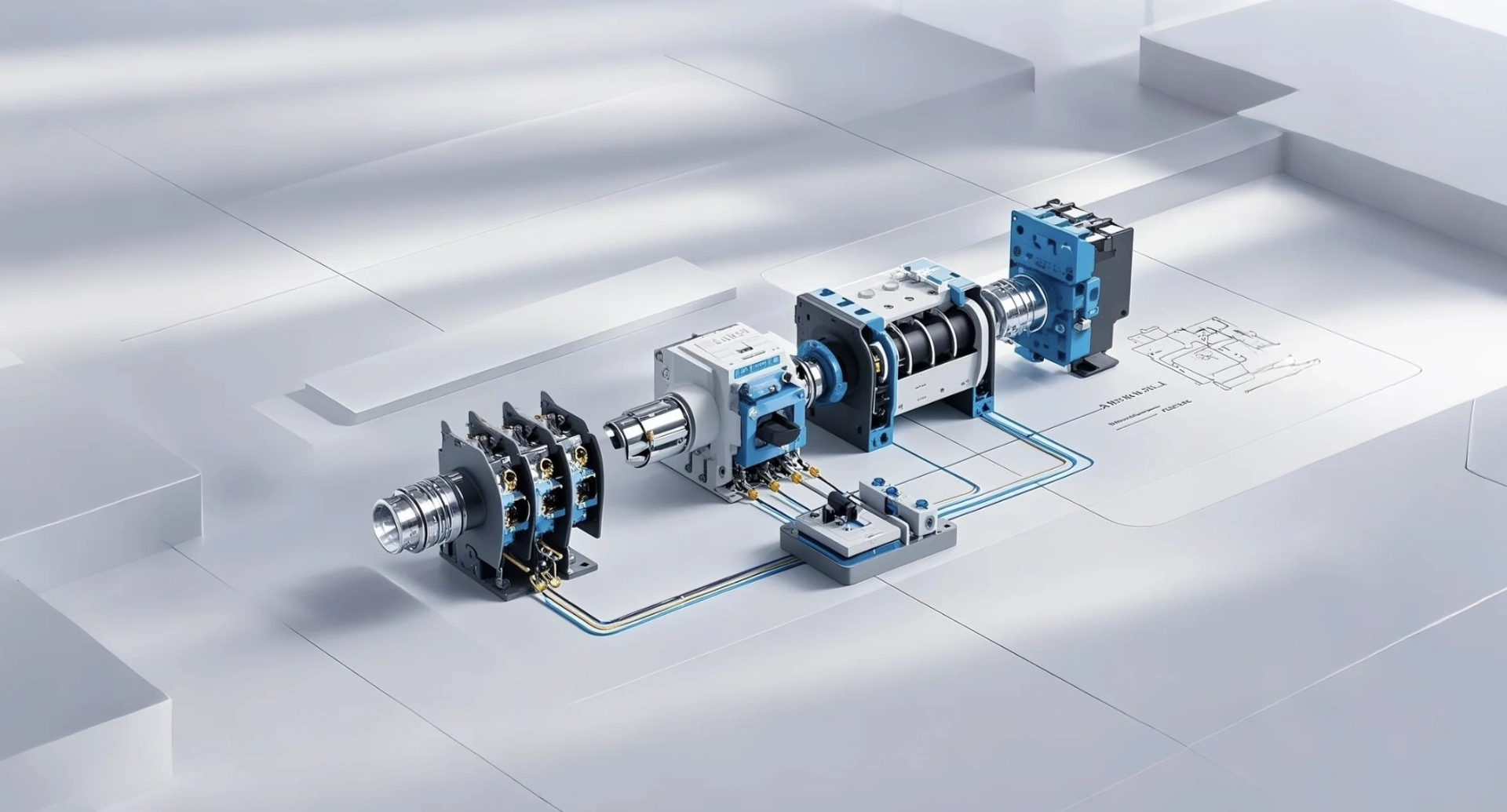
Electronics reliability depends on how well heat is moved from components to ambient. This procurement guide explains how to source thermal management services and materials—especially Thermal Interface Materials (TIMs) and heat sinks—while specifying the right validation standards. For buyers and engineers, choosing partners with scalable manufacturing and disciplined testing ensures performance, compliance, and cost control. Learn how to define requirements, compare options, and write RFQs that vendors can execute.
To accelerate sourcing from prototype to volume, you can leverage a provider with integrated capabilities and practical guidance. Learn about our end‑to‑end manufacturing approach and use the product catalog to explore materials and components. This guide will answer critical questions like how to choose TIMs for your assembly method and duty cycle, how to select a heat sink process and finish, and which test standards to reference in your RFQ for consistent validation.
Why Thermal Management Procurement Matters in Electronics
Thermal management determines performance, safety, and lifecycle cost in sectors from automotive to aerospace and consumer devices. Poor heat removal raises junction temperatures, accelerates aging, and can cause drift or failure under load. A rigorous procurement approach aligns thermal targets with material selection, assembly constraints, and verification methods. Start by defining power dissipation per component, allowable temperature rise, airflow or conduction paths, enclosure constraints, and regulatory requirements. Reference established industry sources—such as JEDEC thermal characterization standards, UL 94 flammability guidance, and IPC design standards—to ensure vendor proposals are anchored to defensible criteria. Procurement teams should also specify measurement repeatability, sampling plans, and change‑control to maintain performance across builds.
Selecting Thermal Interface Materials (TIMs): Criteria, Trade‑offs, and Test Methods
TIMs bridge micro‑gaps between heat sources and sinks to reduce contact resistance. Choosing the right TIM depends on assembly method (dispense, stencil, preform, tape), mechanical compliance, pump‑out resistance, rework requirements, surface energy, and regulatory compliance. Document operating temperature range, vibration/shock profile, and surface flatness, then shortlist TIM types—gap fillers, greases, phase‑change materials, elastomer pads, graphite foils, or adhesive films—based on those constraints. In your RFQ, request data for thermal resistance at target pressures, stability under cycling, and compatibility with finishes (e.g., anodized aluminum, nickel plating). For verification, require repeatable test methods and acceptance criteria aligned with ASTM thermal conductivity measurement practices and JEDEC package/board thermal standards. Consider flammability ratings per UL 94 and materials compliance (RoHS/REACH).
| TIM Type | Thermal Objective | Assembly Method | Compliance Focus | Typical Applications | Pros | Considerations |
|---|---|---|---|---|---|---|
| Gap Filler (Elastomer) | Conform to large tolerances | Cut‑to‑size, hand/place | UL 94, RoHS/REACH | Enclosures, power modules | Easy handling; reworkable | Compression set; thickness control |
| Thermal Grease | Low interface resistance | Dispense, stencil | RoHS/REACH | CPU/GPU, ASICs | High wetting; fills micro‑voids | Pump‑out under cycling; cleanliness |
| Phase‑Change Material | Repeatable contact after activation | Preform, tape | UL 94, RoHS/REACH | Heatsinks on processors | Stable once set; clean | Activation temperature; storage |
| Graphite Foil/Pad | In‑plane spreading | Cut, laminate | RoHS/REACH | Mobile, thin devices | Lightweight; thin | Out‑of‑plane conductivity lower |
| Adhesive Film | Bond + thermal path | Die‑cut, lamination | UL 94, RoHS/REACH | Sensors, small modules | Assembly simplification | Rework complexity; cure time |
Heat Sink Sourcing and Design for Manufacturability (DFM)
Heat sinks translate board‑level heat to ambient via conduction and convection. Procurement should choose a process (extrusion, CNC machining, die casting, or sheet‑metal) based on geometry complexity, tolerances, MOQ, and total cost of ownership. Extrusion excels for straight fins and medium volumes; CNC machining enables tight tolerances and custom profiles; die casting supports complex geometries at higher tooling investment; sheet‑metal assemblies are cost‑effective for ducted flows or integrated chassis. Specify alloy, surface finish (anodize, nickel, powder coat), mounting features, and airflow constraints. Include tolerance and flatness requirements for the base to ensure TIM performance. Reference design guidance from NIST and NASA resources when defining thermal pathways and verification plans.

| Process | MOQ | Tooling Investment | Lead Time | Tolerance | Surface Finish | Cost Profile | Best Use Cases |
|---|---|---|---|---|---|---|---|
| Extrusion | Medium | Low‑Medium | Short‑Medium | Moderate | Anodize, dye | Economical for volume | Straight fins, standard profiles |
| CNC Machining | Low | None | Short | Tight | Anodize, nickel | Higher piece cost | Custom bases, prototypes |
| Die Casting | High | High | Medium‑Long | Moderate | Chromate, paint | Efficient at scale | Complex geometries, high volume |
| Sheet‑Metal Assembly | Low‑Medium | Low | Short | Moderate | Powder coat, plating | Cost‑effective | Ducts, chassis‑integrated cooling |
Standards, Compliance, and Thermal Testing
Standards ensure comparable measurements and regulatory safety. In RFQs, cite test and acceptance criteria explicitly: thermal resistance measurement method, sample size, and re‑test triggers. For characterization, align with JEDEC thermal framework (e.g., package/board conditions) and ASTM practices for material conductivity. For safety, include UL 94 flammability ratings in materials selection. For PCB and assembly quality, use IPC standards. These references make vendor proposals measurable and auditable across builds.
| Standard | Purpose | Applies To | RFQ Line Item Example |
|---|---|---|---|
| JEDEC Thermal Characterization | Comparable thermal metrics | IC/heatsink assemblies | “Report θJA/θJC with specified fixtures per JEDEC” |
| ASTM Thermal Conductivity | Material property validation | TIMs, substrates | “Conductivity measured via ASTM method; include full setup” |
| UL 94 | Flammability classification | Polymers, TIMs | “Material must meet UL 94 V‑0 or documented rating” |
| IPC Design/Assembly | Design and workmanship | PCBs, assemblies | “Design/assembly per IPC standards; workmanship acceptance defined” |
Supplier Evaluation, RFQ, and Quality Assurance
Strong suppliers combine process breadth, engineering support, and scalable capacity. RapidDirect has operated since 2009, using AI to help global companies optimize production, reduce time and cost, and improve efficiency. With specialized capabilities in CNC machining, injection molding, sheet‑metal fabrication, and 3D printing, projects are guided end‑to‑end by experienced engineers—from rapid prototyping to mass production—through advanced internal facilities and a China network. The online platform supports instant quotes and real‑time updates, enabling traceable execution. For OEM/ODM, RapidDirect offers concept‑to‑market guidance and full customization across materials, thickness, color, packaging, and logo printing, leveraging 20+ years of industry know‑how and high‑standard manufacturing.
Build your RFQ around measurable deliverables: target thermal resistance, surface flatness, finish type, assembly method, and acceptance criteria; require test reports aligned to JEDEC/ASTM and compliance declarations for UL 94 and RoHS/REACH. Add a sampling plan, PPAP‑like documentation, change‑control policy, and re‑qualification triggers. Specify packaging to protect flatness and finish, with clear labeling for traceability. For multi‑process parts (e.g., CNC base + bonded fins + anodize), define interfaces and inspection gates to maintain thermal and cosmetic quality.
Cost, Lead Time, and Risk Management
Thermal performance must be balanced against procurement realities. Consider total cost of ownership beyond unit price: tooling amortization, yield, rework, logistics, and warranty exposure. Extrusion and sheet‑metal can lower unit costs for simpler geometries; CNC minimizes tooling and speeds early iterations; die casting becomes economical at higher volumes despite tooling investment. Lead time depends on alloy availability, finishing queues, and test cycles; define buffers for verification runs. To mitigate risk, dual‑source critical TIMs and specify a second finish option (e.g., clear vs. black anodize) where performance differences are acceptable. Consolidate suppliers where end‑to‑end capability improves schedule control and reduces interface risk.
Conclusion
Procurement decisions in electronics thermal management hinge on disciplined requirements, tested materials, and manufacturable designs. Specify standards, choose processes aligned to geometry and scale, and partner with suppliers who can guide your program from prototype to mass production. Explore our integrated capabilities via the About page and browse the products catalog to initiate your RFQ and accelerate delivery.
Frequently Asked Questions
How do you guide projects from concept design to market success in OEM/ODM manufacturing?
RapidDirect provides end‑to‑end guidance from concept through market success. Experienced engineers support design, process selection, verification, and scaling. The online platform offers instant quotes and real‑time updates, while advanced internal facilities and a China network enable flexible transitions from rapid prototyping to mass production.
What customization options are available for OEM/ODM thermal management parts and materials?
RapidDirect offers comprehensive customization based on market needs, including materials, dimensions and thickness, color, packaging, and logo printing. This allows projects to meet specific performance, branding, and regulatory requirements while maintaining manufacturability.
Which manufacturing processes and industries do you specialize in for thermal management components?
RapidDirect specializes in CNC machining, injection molding, sheet‑metal fabrication, and 3D printing. These services support industries such as aerospace, automotive, medical, and consumer products, enabling solutions from rapid prototypes to high‑volume production.
How does your platform improve procurement efficiency and quality assurance?
The platform enables instant quotations and real‑time project updates, while engineers guide execution and verification. Combined with advanced internal facilities and a China network, RapidDirect ensures flexible scaling, reduced time and cost, and improved efficiency with clear documentation and project oversight.